By Rinki Pandey December 16, 2025
One-time donations are rarely the driving force behind nonprofit success. Long-term supporters who feel emotionally connected to the cause, trust the organization, and believe in its mission are what create lasting impact. This is where a donor journey map becomes essential.
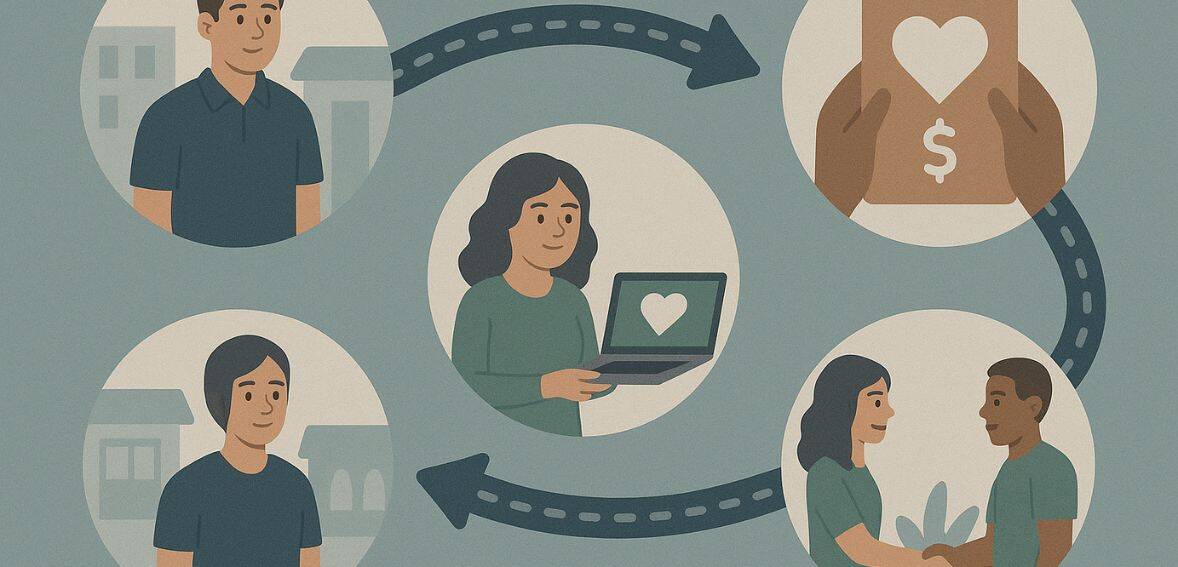
A donor journey map is neither a strict funnel nor a marketing technique. It is a strategic framework that helps organizations understand how people move from first awareness to long-term commitment. When done correctly, it unifies stewardship, fundraising, and communication into a single, seamless experience that seems organic rather than transactional.
The donor journey is fundamentally about relationships. Every donor starts somewhere, often driven by curiosity rather than a strong intention to give. A community event, a shared article, a social media post, or a personal referral could lead them to an organization.
The tone is established by that initial exchange. The relationship ends before it starts if it seems unclear, impersonal, or excessively aggressive. A strong journey plan ensures that each stage builds emotional connection, clarity, and trust over time.
The Awareness Stage: Where Interest Is Sparked

Long before a donation is made, the donor journey starts. Potential supporters first come into contact with the organization during the awareness stage. This could occur through offline touchpoints like events, word-of-mouth, or local alliances, or through digital channels like social media, search engines, or online campaigns.
At this stage, people are not thinking about donating yet. They are merely attempting to comprehend your identity and purpose. Credibility is the main goal during awareness. Visitors should be able to readily understand the organization’s goals, the issue it is trying to solve, and the reasons it is worthwhile.
More important than fundraising terminology are personal stories, clear messaging, and transparency. If the first impression feels authentic and purposeful, curiosity deepens. If it feels vague or sales-driven, potential donors quietly move on.
First Engagement: Turning Interest into Connection
Engagement comes next when awareness has been created. People start interacting more purposefully at this point. They might read impact stories, attend events, follow social media accounts, or subscribe to a newsletter. Although engagement is an indication of interest, it is nevertheless weak.
People are choosing whether or not to pay attention to and trust the organization. Emotional alignment and education are key components of this stage. Instead of asking for donations, communications should emphasize outcomes, values, and storytelling.
People are more able to see themselves as a part of something worthwhile when they understand how programs operate, how lives are affected, and how supporters make a difference. A donor journey map ensures that early interactions feel welcoming and low-pressure rather than overwhelming.
The First Donation: A Moment of Trust

One of the most important steps in the entire process is the initial contribution. It symbolizes a leap of faith. No matter the amount, the emotional significance of a first gift is high for most donors. Donors want to know if the organization will value their donation and if their money will be spent appropriately. A significant part is played by the donation procedure itself. The experience can be ruined by complicated paperwork, ambiguous messages, or technical difficulties.
Confidence is strengthened by a donation flow that is courteous, transparent, and seamless. What occurs right after is equally significant. Sincere appreciation, prompt acknowledgment, and impact clarity attest to the donor’s correct choice. A seamless donation experience starts with donation page optimization, helping nonprofits reduce friction and increase the likelihood that interested supporters complete their first gift.
Understanding Donor Emotions at Each Stage
The checkout stage is a moment of emotional vulnerability for customers. At different times, feelings of curiosity, optimism, skepticism, pride, and belonging emerge. By understanding how donor emotions shift over time, organizations can communicate more effectively.
For example, a recurrent contributor could want assurance that their loyalty is appreciated, whereas a first-time donor would feel wary. Tone mismatches, such as aggressive fundraising during times that call for thankfulness, are avoided by understanding emotional context.
Non-profits’ messaging sounds natural rather than forced when they recognize emotional development. This emotional awareness lessens donor weariness and builds trust. Experiences that are human, sympathetic, and consistent with the reasons people offer in the first place are produced by a journey map that takes emotions into consideration rather than just actions.
Post-Donation Experience: Reinforcing the Relationship
Whether or if not there will be a second donation is frequently determined by what occurs after the first. This stage is often undervalued by corporations, which view it as administrative rather than relational. In actuality, loyalty starts to develop during the post-donation conversation.
Donors need to feel appreciated rather than processed. A sense of belonging is enhanced by timely receipts, personalized thank-you notes, and follow-up reports on the utilization of funds. Conversely, emotional distance is produced by silence or generic answers. Instead of presuming trust, a robust donor path map guarantees that stewardship is deliberate and consistent.
The Role of Timing in Donor Communications
When it comes to donor communications, timing is crucial. While a delayed acknowledgement can reduce emotional momentum, an instant thank-you note strengthens trust. Similarly, requesting another gift too soon could come across as inconsiderate, while waiting too long could cause disengagement.
A donor journey map makes it clear when each step should be completed, ensuring that communication is courteous and deliberate. Outreach cadence should be influenced by giving history, personal milestones, and seasonal circumstances.
Messages feel encouraging rather than intrusive when the time is in line with donor expectations. Organizations that communicate at the right moments demonstrate empathy and emotional awareness. Instead of a series of disruptions, effective timing transforms communication into a rhythm that donors are accustomed to.
Building Consistency Through Ongoing Communication

Consistency takes precedence over frequency as donors give more than one gift. Supporters are kept emotionally engaged by frequent updates that discuss achievements, difficulties, and practical results. These messages should feel like ongoing conversations, not one-way announcements.
Donors want to know how their contributions fit into the overall scheme of things. Segmentation becomes useful at this point. Different facets of the mission are important to different donors.
Communication feels more relevant than generic when it is tailored according to interests, providing background information, or participation level. A well-considered journey map acknowledges that different factors drive different long-term supporters.
Personalization Beyond Using a First Name
Addressing contributors by name is only one aspect of true personalization. It involves understanding communication preferences, engagement history, chosen causes, and reasons. While some contributors are more receptive to human experiences, others have a strong connection with impact data.
These subtleties are incorporated into a well-designed donor path map, which enables organizations to customize experiences. A donor’s support of a particular program or the length of time they have been a part of the community are examples of personalization.
Loyalty increases when donors feel appreciated for who they are rather than just how much they donate. This degree of customization conveys consideration and respect, turning ordinary updates into deep discussions that reinforce enduring bonds.
Encouraging Deeper Involvement
Engaged donors might eventually be prepared for further involvement. Larger donations are not necessarily the result of this. Volunteering, advocacy, peer-to-peer fundraising, and attending private events are a few examples. By converting contributors from passive supporters to active participants, these possibilities increase emotional investment.
The change should seem natural. Someone may be turned off if you ask them to get more involved before they’re ready. Organizations can find indicators of preparedness, such as consistent donations, high levels of involvement, or favourable reactions to communications, by using a donor path map. An invitation feels more like an opportunity than a duty when it fits the donor’s journey.
Aligning Internal Teams Around the Donor Journey

Only when internal teams are in agreement with a donor journey map will it be effective. Donor experience is influenced by marketing, programming, fundraising, and support personnel, frequently without the donor’s knowledge.
Donors may become irritated by inconsistent messaging or redundant contact as a result of misalignment. A shared journey map ensures that all departments are clear about their roles in fostering trust. Donor interactions feel unified rather than disjointed when teams operate together utilizing the same framework.
Additionally, internal alignment enhances decision-making and responsibility. Donors notice and value the smoother, more consistent experiences provided by organizations that view the donor journey as a shared responsibility rather than merely a fundraising tool.
Recurring Giving and Long-Term Commitment
Giving regularly frequently serves as a link between a partner and a supporter. Monthly or yearly pledges strengthen a donor’s sense of purpose and give organizations financial stability. Recurring initiatives, however, are only successful when funders see their worth.
Donors are better able to see the broad picture when they are informed about how recurrent gifts maintain programs, lower uncertainty, and have a lasting impact. Acknowledgment and continuous gratitude are equally significant. Long-term supporters desire assurances that their ongoing efforts are important and have an impact.
When supporters understand how recurring donations provide stability and sustained impact, they are more likely to deepen their commitment and view their giving as an ongoing partnership rather than a one-time action.
Technology as an Enabler, Not the Journey Itself
Although technology is crucial for managing donor journeys, connections should be strengthened rather than replaced by it. Analytics platforms, automation tools, and CRM systems all aid in tracking behavior and tailoring outreach, but their efficacy depends on the underlying strategy.
By indicating when automation is suitable and when human connection is more important, a donor path map guarantees that technology is used purposefully. While careful utilization increases efficiency without compromising warmth, an over-reliance on automation might come across as impersonal.
Businesses that strike a balance between empathy and technology develop scalable yet human systems. Better experiences backed by the appropriate tools are the aim, not more tools.
Handling Lapses with Empathy
Not all donors stay active indefinitely. Priorities change, life changes, and financial situations change. A donor journey map takes into consideration mistakes without placing blame. While forceful re-engagement can feel intrusive, silence following a missed donation can feel chilly.
Goodwill is maintained by thoughtful contact that recognizes the relationship, shows gratitude for previous support, and leaves the door open for future involvement. Maintaining trust safeguards the organization’s reputation and long-term prospects even if a donor does not return right away.
Turning Supporters into Advocates
Advocacy is the last phase of the donor journey. Long-term backers frequently take on the role of ambassadors, spreading the word about the cause and increasing its influence beyond their personal contributions. The foundation of this stage is the gradual development of trust, happiness, and emotional bonding.
Advocacy is not compelled. When donors take pride in their affiliation with the organization, it organically arises. This connection is strengthened by giving people the chance to tell tales, invite others, or publicly represent the mission. A well-thought-out journey plan acknowledges advocacy as a logical consequence of ongoing relationship-building.
Measuring and Refining the Journey
A map of a donor’s journey is dynamic. It changes as society conventions, communication mediums, and donor expectations do. Organizations can find areas of friction and areas for improvement by routinely analysing engagement statistics, feedback, and retention trends.
Metrics that show how effectively the journey is working include lifetime value, engagement rates, donor retention, and repeat giving. More significantly, qualitative feedback reflects the emotions of contributors. By paying attention to supporters, the journey is kept human-centered rather than process-driven.
Designing for Longevity, Not Short-Term Wins

For instantaneous outcomes, including rapid conversions or campaign spikes, many organizations optimize donor journeys. However, creating journeys with longevity as a top priority results in sustainable impact. This entails prioritizing connections over transactions and trust over hurry.
Even in situations when immediate benefits are not apparent, a long-term perspective promotes perseverance, consistency, and stewardship. Over time, donors who feel appreciated and respected tend to make more significant contributions and advocate with greater zeal.
A donor journey map designed for longevity moves the emphasis from one-time deeds to relationships that last a lifetime. By doing this, organizations develop stability, resilience, and a base of supporters that gets stronger every year.
Conclusion
Respect is ultimately the key to creating a donor journey map. By crafting experiences that are meaningful rather than robotic, it honors the donor’s time, values, and trust. From first awareness to sustained advocacy, each phase builds on the one before it, creating a connection based on openness, appreciation, and a common goal.
Businesses that make investments to understand and support the donor journey go beyond immediate fundraising objectives. They build supportive groups that continue to have an impact over time. A careful donor journey map turns casual interest into enduring engagement and giving into true partnership in a world when trust is brittle and attention is scarce.
FAQs
How does a donor journey map differ from a fundraising funnel?
A donor journey map emphasizes relationships, emotions, and trust-building over time, rather than focusing only on conversion stages and one-time outcomes.
When should non-profits update their donor journey map?
Non-profits should update their donor journey map whenever donor behavior, communication channels, or supporter expectations change in a meaningful way.
Can small non-profits benefit from donor journey mapping?
Yes. Even simple donor journey maps help small organizations improve clarity, consistency, and long-term donor retention.
What is the biggest mistake organizations make in donor journeys?
Focusing too heavily on donation requests while under-investing in gratitude, storytelling, and impact communication.
How do you measure success across the donor journey?
Success is measured through donor retention, depth of engagement, repeat giving, and qualitative donor feedback.